The style notebook
Prada Spring 2027 Skirts: Building a Skirt-Led Outfit Rotation
Prada Spring 2027 skirts treated like a T-shirt: the small top rotation that repeats across knee-length, A-line and wrapped skirts, plus what to leave out.
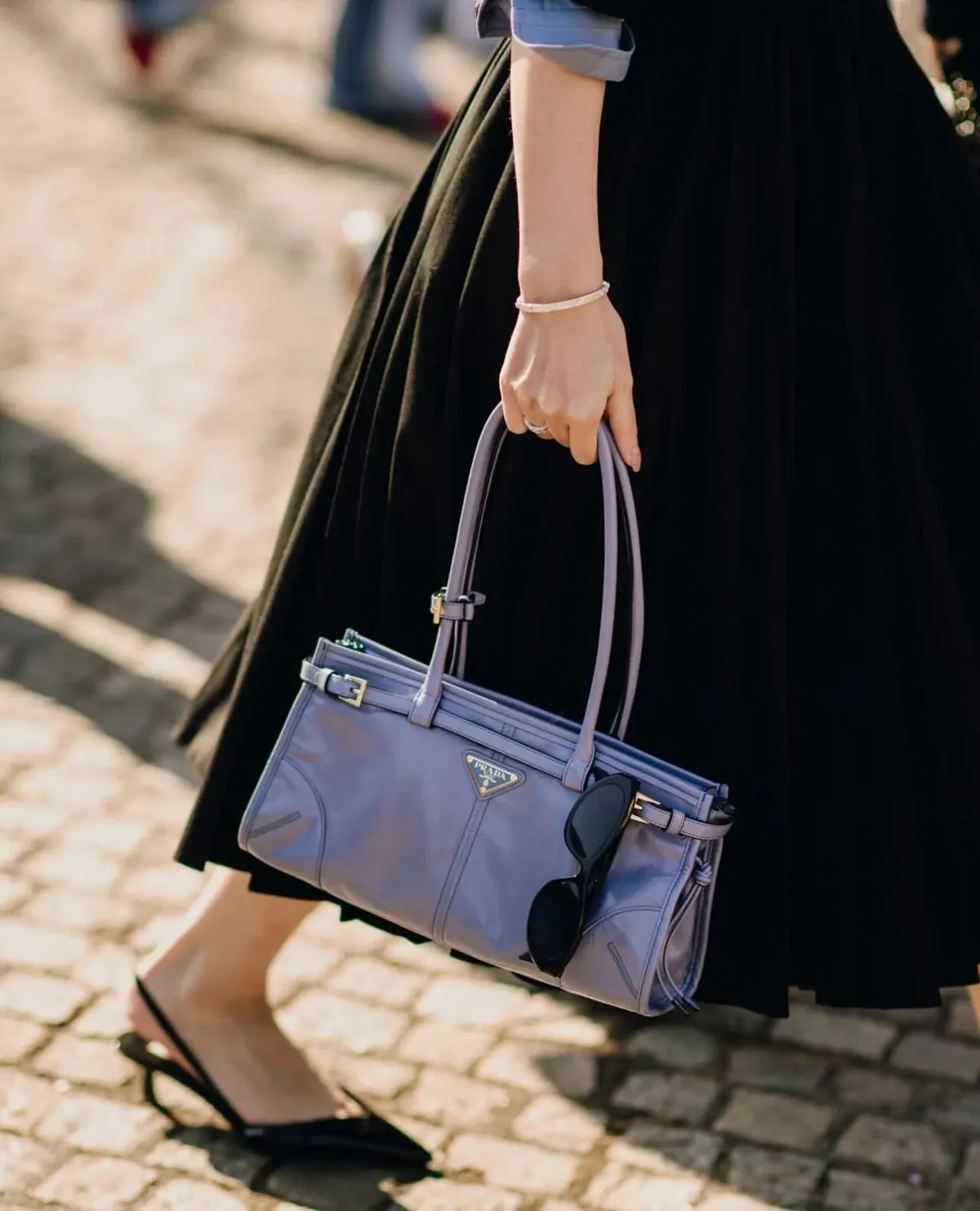
Prada Spring 2027 is a skirt-led wardrobe, and the most useful styling question is the one Prada posed herself: if a skirt works like a T-shirt, which tops actually repeat across different skirts? This guide answers that with a clothing plan, not a shopping list. The aim is a short rotation of tops that sits over a plain knee-length skirt, holds its line against an A-line shape, and stays quiet beside a wrapped or embroidered one. The reference image shows an existing wardrobe reference, the Prada Bonnie Bag, kept here as a reminder of proportion and finish rather than a piece from the new collection.
Start with the skirt's job
In the collection the skirt is the base layer, not the afterthought. Prada described the skirt as a versatile uniform that can be dressed easily with a sweater or a shirt, and the designs ran from plain to embroidered, with knee-length, A-line and pleated shapes appearing alongside wrapped styles. Styling begins by deciding which job a skirt is doing that day.
A plain knee-length skirt wants a top that adds structure or contrast. An A-line or pleated shape wants a top that keeps the waist readable. A wrapped skirt, especially one with a wide closure band or crystal detailing, wants a quiet top so the waistband leads. This is my interpretation of the pieces, not a rule from the collection itself.
The core top rotation
Four tops cover most of a skirt-led week without repeating a whole look. Each has a distinct role, so choosing between them is fast.
- Fine crewneck sweater. The most literal translation of the T-shirt comparison: a neat knit over a slip or plain skirt, sitting close at the waist or short enough to tuck without bulk.
- Clean poplin shirt. Fuller through the body with a collar that frames the face. Tuck it for A-line shapes, half-tuck or knot it for plain knee-length skirts.
- Compact short-sleeve knit. A boxy or slightly fitted smooth knit is the warm-weather version of the sweater, best with plain or lightly embroidered skirts.
- Structured cropped cardigan. Worn open over a base layer or closed as a top, it adds a third piece without hiding a decorative waistband.
These are deliberately ordinary. Interest comes from how each sits against the skirt, not from novelty detailing.
Matching tops to knee-length, A-line and wrapped skirts
A knee-length skirt is the easiest to rotate. A fine sweater tucked flat gives a clean line; a poplin shirt with rolled sleeves and a defined waist reads tailored; a compact knit gives everyday ease. Keep volumes from competing: if the skirt is narrow, the top can be a little fuller, and if the skirt is full, the top should sit closer.
An A-line shape needs a top that stops at or just above the waistband. A cropped cardigan worn closed is the simplest answer, with a short-sleeve knit as the warm-weather alternative. A shirt works if it is tucked fully with pushed-up sleeves, which stops the upper body reading as wide as the skirt.
A wrapped skirt, particularly one with a large band or crystal embroidery, should meet the plainest top in the rotation. The fine crewneck and the clean shirt are the natural choices; the compact knit works when the wrap is plain. Let the closure be the focal point and avoid a top with competing detail at the waist.
Use texture to separate plain from eccentric
Plain skirts benefit from a top with surface interest: a ribbed knit, a shirt with a visible weave, or a cardigan with a clean button line. Decorative skirts work better with smooth, matte tops so the eye has somewhere calm to rest. The same four tops then behave differently across the range.
Colour follows the same logic. Keep the top a solid neutral when the skirt carries embroidery, ribbon trim or a crinoline layer. For a plain skirt, a deeper or brighter top gives the outfit a centre. Avoid pairing a busy top with a busy skirt unless the patterns are deliberately related.
Repeatable formulas for the week
Think in formulas rather than finished outfits. Sweater, plain knee-length skirt and a structured shoe make a work-ready combination. Shirt, A-line skirt and a low-profile loafer handle a long day. Compact knit, wrapped skirt and a simple flat keep the look light. Cropped cardigan, plain skirt and a shoulder bag give a weekend version. Each uses the same small top group, which is the point of treating the skirt like a T-shirt.
Accessories should support the waistline decision. A slim belt can define a plain skirt, but skip it when the skirt already has a wide band or embroidery. For bag and shoe decisions in the same quiet register, the Prada Bonnie Bag work and dinner outfits guide covers carrying polish from desk to dinner, and Prada slouch boots outfit ideas handle the footwear side. If you wear wide-leg trousers on skirt-free days, the wide-leg trousers and loafers hem guide keeps the same proportions in play.
What to leave out of the rotation
Skip tops that end at the widest part of an A-line skirt, and skip anything with heavy embellishment at the waist when the skirt already has a decorated closure. Very small novelty tops appeared in the collection, but they are a specific styling statement rather than a rotation workhorse. If you want that energy, use it once with the plainest skirt and keep the rest of the outfit simple.
Also avoid treating every skirt as formal. The plain knee-length and lighter A-line shapes are the ones that make the T-shirt comparison credible; save the embroidered and wrapped versions for days when the skirt is meant to lead.
A practical weekly plan
Give each top one clear slot. Start the week with the shirt and an A-line skirt. Move to the fine sweater and a plain knee-length skirt midweek. Use the compact knit with a wrapped skirt when you want the closure to show. Finish with the cropped cardigan over a plain skirt and a simple bag. Rotating this way keeps every skirt in use and stops the decorative pieces from becoming occasional.
The goal is not more clothes. It is a repeatable set of top decisions that lets a skirt-led wardrobe work every day, whether the skirt is plain or eccentric.