The style notebook
Prada Spring/Summer 2023 Opera Coats and Leather Jackets: Layering Ideas
How to layer Prada Spring/Summer 2023 opera coats and leather jackets: which garment sits on top, and how the trailing fabric should fall.
A Prada Spring/Summer 2023 opera coat and leather jacket pairing only works when you decide which one is the coat and which one is the lining. The official Prada show statement, published 22 September 2022, says day and evening clothes cross-pollinate and that “opera coats fuse with leather jackets, tailoring borrows trains of fabric.” That sentence describes a fusion, not a stack of two finished pieces worn at once. In practice, the leather jacket reads best as the inner layer or the top layer — never both — and the heavy fabric with the train belongs on the outside, where its length can fall cleanly.
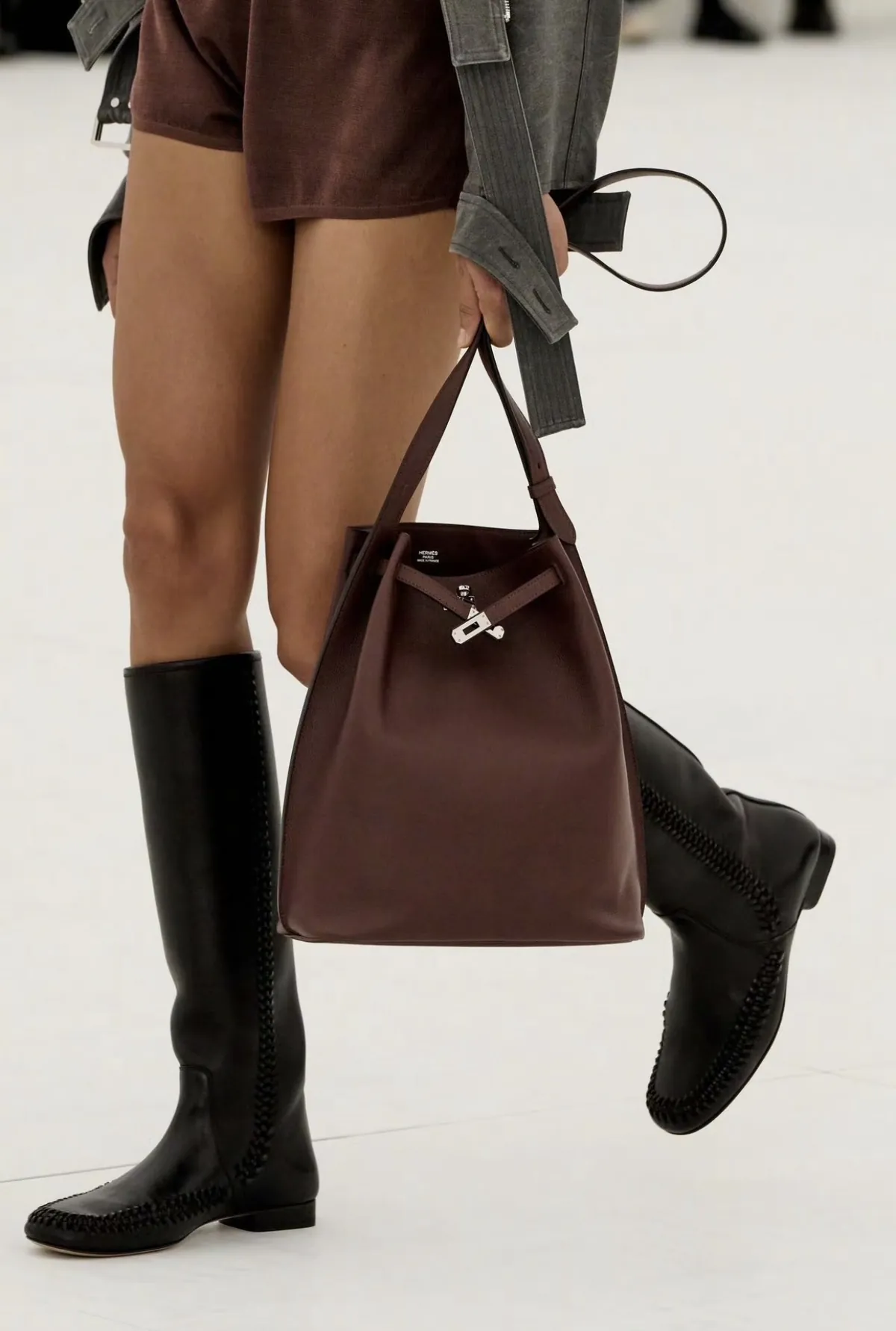
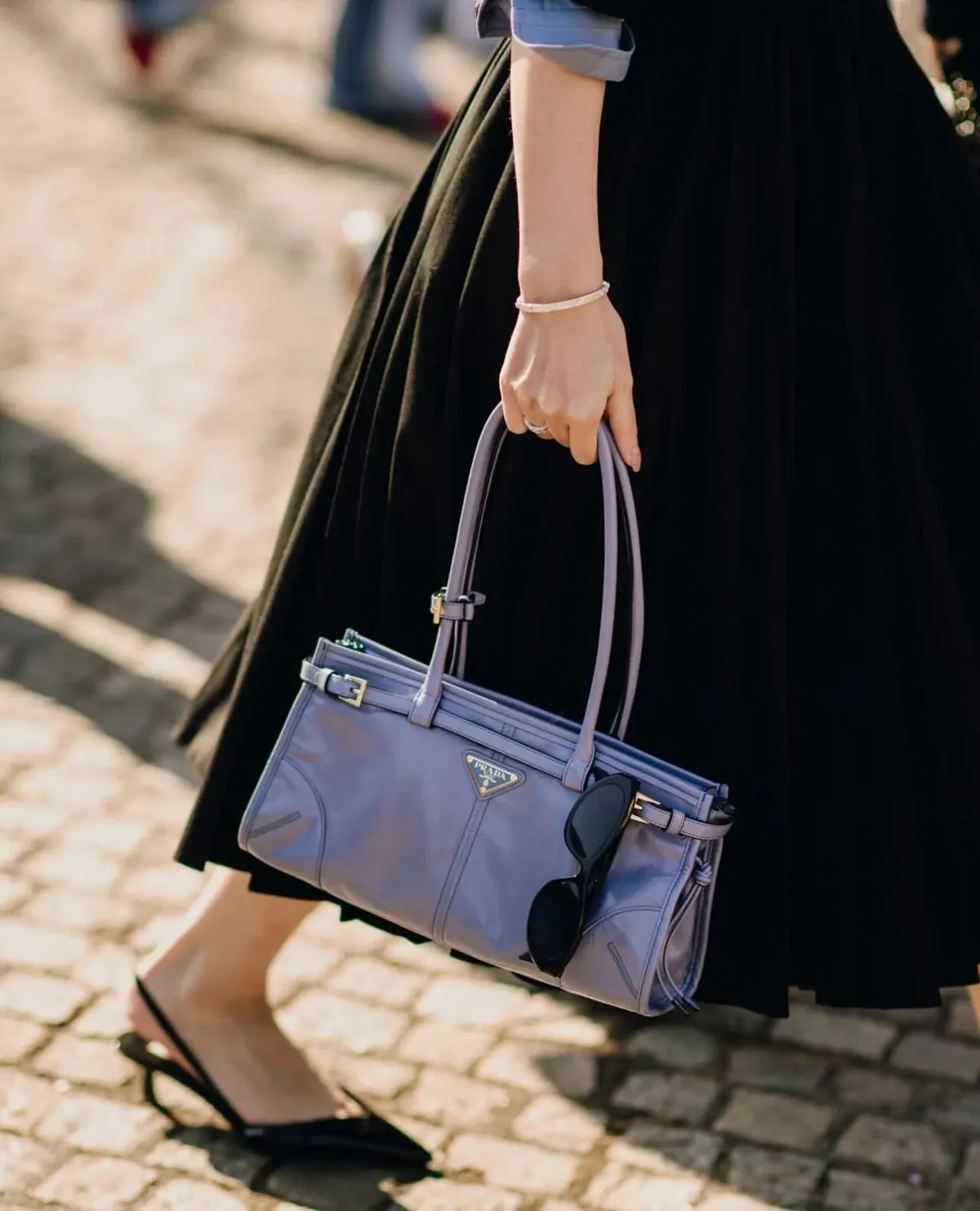
The featured image is an existing Prada wardrobe reference, separate from the Spring/Summer 2023 looks discussed here.
Let the leather jacket be the lining
The most common version: a slim leather jacket buttoned or zipped, then a long opera coat open over it. The leather gives the outfit a firm, close line through the torso and arms, which is exactly what a soft, trailing coat needs underneath it. A bulky knit or a puffer in that position would push the opera coat off the shoulders and break the fall of the fabric.
Keep the leather jacket short enough that its hem disappears inside the opera coat, or choose a version cropped to the waist so the coat's front edges hang free. If the leather jacket is longer than the coat, the two hems land at nearly the same height and the layering looks accidental rather than composed.
When the leather should sit on top
The reverse order suits a different evening. Put a leather jacket over a light opera coat only when the coat is thin enough to compress — a fluid, unlined fabric rather than anything with body. The leather then acts as the finishing layer and the coat's train becomes a deliberate, visible tail below the jacket hem.
This is the more difficult order to carry off. The jacket's hem cuts the coat's line at the hip or waist, and the train below it needs to be long enough to read as a decision. A short train below a leather jacket looks like a shirt tail; a long one looks intentional.
How the train should fall
The show statement groups trains with tailoring, treating the trailing fabric as a borrowed detail rather than a cape. That suggests restraint: the train should hang from the back of the coat, behind the body, not swing around the front. Wearing the coat open lets the front panels fall straight and keeps the train behind your stride.
Belted or closed, the coat turns the train into a single mass of fabric behind you, which is the cleaner choice for a dinner or an indoor evening. Open, it moves and needs more room around you. Neither is wrong; the closed version simply does less work while you are sitting down.
- Closed and belted: the train stays behind the body; good for tight rooms and seated evenings.
- Open and unbelted: the front falls straight, the train moves; better for walking and for showing the leather jacket underneath.
- Half-buttoned: unreliable on a coat with a train, because the closure pulls the back fabric forward.
The fit check to do before you commit
Layer the two garments together, ideally in front of a mirror, and walk a few steps. Ask two questions: does the opera coat sit on your shoulders without the leather jacket pushing it up, and does the train clear the floor when you stand and turn? A coat with a train has to work at your height and stride, and no amount of styling fixes a hem that catches underfoot.
The plainest answer to the rest of the outfit is a poplin shirt or a fine knit under the leather, matte trousers, and one quiet shoe. The torn paper-based dresses from the same collection point the other way: when the garment already carries interruption, the layers around it should stay calm. The same logic applies here, with the opera coat's train doing the interrupting.
If you are still building the wardrobe around these pieces, the antique nappa handbag advice covers the accessories question — a patinated, wrinkled leather bag sits comfortably beside a smooth leather jacket without adding a third texture to the argument.