The style notebook
Prada Spring/Summer 2027 Jeans and Jean Jackets: Miuccia Prada and Raf Simons Outfit Ideas
Prada Spring/Summer 2027 denim, jean jackets and tees: how to wear the plain trio so the exact linear cut, not extra styling, carries the outfit.
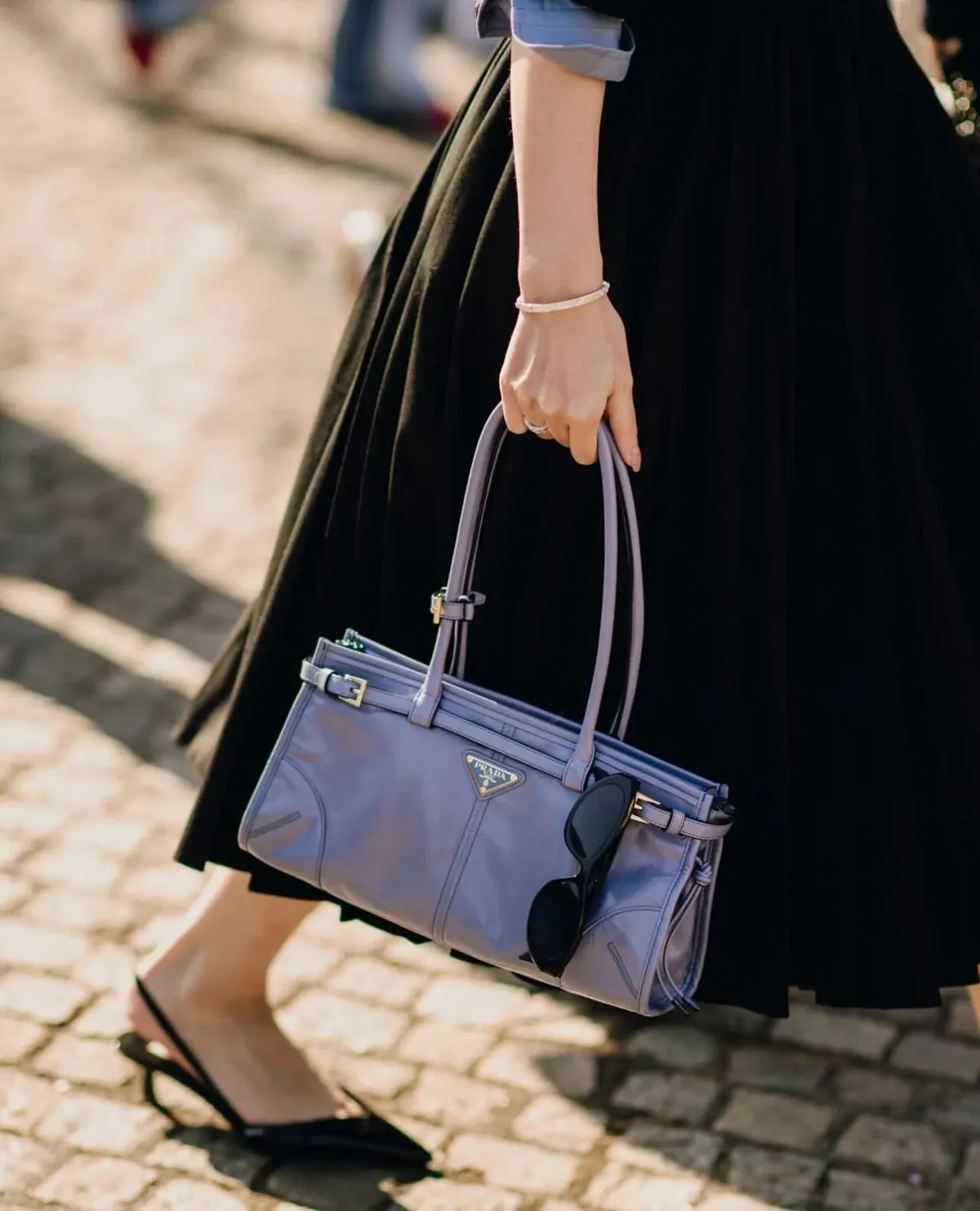
For Prada Spring/Summer 2027, Miuccia Prada and Raf Simons present an everyday trio that asks a fair question: when jeans, a jean jacket and a T-shirt lose their extra detail, what stops them reading as ordinary? The official show statement frames the answer in cut, not styling tricks. Prada describes an exact, highly-controlled silhouette, refined and linear, constant, and places jeans, jean jackets and T-shirts inside that framework as pieces freed from extraneous detail and exaggeration. Treat that as the design premise and the rest of this guide as a styling decision: let proportion do the work and remove the props.
Start with a linear silhouette, not a styling theme
“Linear” here is a useful fitting instruction. It means each garment should follow the body in an unbroken line: a jacket whose shoulder, sleeve and body fall without a wide break, jeans that hang from hip to hem without bunching at the knee or ankle, and a T-shirt that sits close to the torso without pulling. The statement calls the silhouette constant, which is a practical cue to keep the same narrow, straight proportion across all three pieces rather than mixing a boxy top with a flared leg.
My interpretation: the plainness is deliberate, so small fit errors become visible. Before adding anything, check three points — shoulder seam on the jacket, rise and waistband on the jeans, and the T-shirt hem. If those three sit cleanly, the outfit already looks considered.
The jacket-and-jeans formula: one length, one break
Use the jacket as the upper frame and the jeans as a straight column beneath it. A cropped or hip-length jacket that ends at or just below the waistband keeps the line short and linear; a longer jacket works only if the jeans are equally narrow, otherwise the lower half widens against the top. For the jeans, choose a straight or narrow leg whose hem meets the shoe with a single small break, or none at all.
- Jacket: fitted through the shoulder, sleeve ending at the wrist bone, no bulky pockets or contrast stitching competing for attention.
- Jeans: mid-to-high rise, straight from hip to hem, clean at the knee.
- T-shirt: tucked fully, or ending exactly at the waistband — not half-tucked into a loose fold.
- Shoes: a low, narrow profile that continues the leg line rather than cutting it.
Colour can stay close: denim on denim in one wash, or two washes a shade apart. The point is the shape, so tonal dressing is a help, not a requirement.
The T-shirt-only formula: let the tee and jeans be the whole look
Without the jacket, the T-shirt has to carry the upper half. Choose one with a defined shoulder, a neckline that sits flat, and a body that skims rather than clings or billows. Sleeves should end mid-upper-arm or just above the elbow; a long, loose sleeve adds softness that works against the linear idea. Pair it with the same straight jeans, and finish with a belt only if it is thin and matches the denim tone.
This is where the “ordinary” risk is highest, so make the T-shirt the deliberate element: a clean white, a deep navy or a single flat colour, with no print, no distressing and no layered under-shirt. The statement's language of refusal as a positive act supports this — leaving the tee plain is the styling decision, not a lack of one.
What to leave off so the cut stays the point
The temptation with a plain trio is to add a necklace, a scarf, a printed bag or a statement shoe to “finish” it. Resist that where possible. The official statement describes accessories as integrated within the overall structure and streamlined to become part of a whole, which reads as restraint rather than decoration.
- Skip oversized belts, chain straps and visible hardware at the waist.
- Skip layered necklaces over the T-shirt neckline.
- Skip distressed hems, rips and contrast topstitching that break the line.
- Skip a second jacket or overshirt over the denim jacket.
- Keep any bag small and quiet so it does not interrupt the torso.
If you want one accessory, choose a single narrow item — a slim belt, a small shoulder bag — and let everything else stay silent.
Selection criteria before you buy into the trio
Judge the pieces by fit and finish rather than labels. For the jacket, check that the shoulder sits exactly on your shoulder point and the front closes without a gap. For the jeans, check the waistband lies flat when seated, and the leg falls straight from the widest part of the hip. For the T-shirt, check the neckline returns to shape after wear and the shoulder seam stays on the shoulder. These are the details that make plain clothing look exact.
If you already own a denim jacket and straight jeans, the quickest route is to have the sleeve and hem lengths adjusted rather than replace them. A tailor can shorten a sleeve to the wrist bone and narrow a leg by a centimetre or two, which does more for the linear read than any new purchase.
Where this fits alongside other wardrobe references
This trio is a base layer for other decisions in the same wardrobe. For a wider trouser proportion, see how a black shoulder bag works with wide-leg trousers. If you want a fully denim-led look with one bright accent, the denim workwear outfits with a bright accessory guide offers a contrast to the stripped-back approach here. And for a simple shirt-and-jeans alternative, the white shirt and jeans airport outfit shows a softer, more relaxed line.
An existing same-brand wardrobe reference, Prada Spring 2027 Skirts: Building a Skirt-Led Outfit Rotation — existing wardrobe reference, approaches plain dressing from the skirt side and is a separate styling reference rather than a look from the new collection.
The short version
Keep the jacket and jeans in one narrow line, tuck or end the T-shirt at the waistband, and strip away belts, prints and hardware. The outfit stops reading ordinary when the fit is exact and the proportions are consistent — which is precisely the control the Prada Spring/Summer 2027 statement puts at the centre of the collection.