The style notebook
Saint Laurent Fall 2026 Ascots and Jackets: Outfit Ideas
Saint Laurent Fall 2026 ascots over a crisp shirt or scoop-neck knit: knot depth, neckline and colour for the softened hourglass jacket.
For Saint Laurent Fall 2026, the printed silk ascot should sit high and tight over a crisp tied shirt, and lower and looser over a scoop-neck knit. The shirt gives the ascot a collar to anchor against, so the knot can be small and the ends controlled; a knit has no collar, so the silk needs to start nearer the collarbone and spread wider to look intentional rather than like a scarf that slipped. Nicole Phelps, writing for Vogue on 28 January 2026, reports printed silk ascots peeking from the collars of crisp shirts finished with ties and from scoop-neck knits, including a chunky saffron sweater she describes as one of the few blasts of colour in an otherwise dark collection. Phelps also reports that the strong jackets Vaccarello has made identifiable were softened at the sides and made ever so slightly hourglass, which he described as not feminine per se but not boxy either. The proportion judgements below are my own styling reading of those reported details.
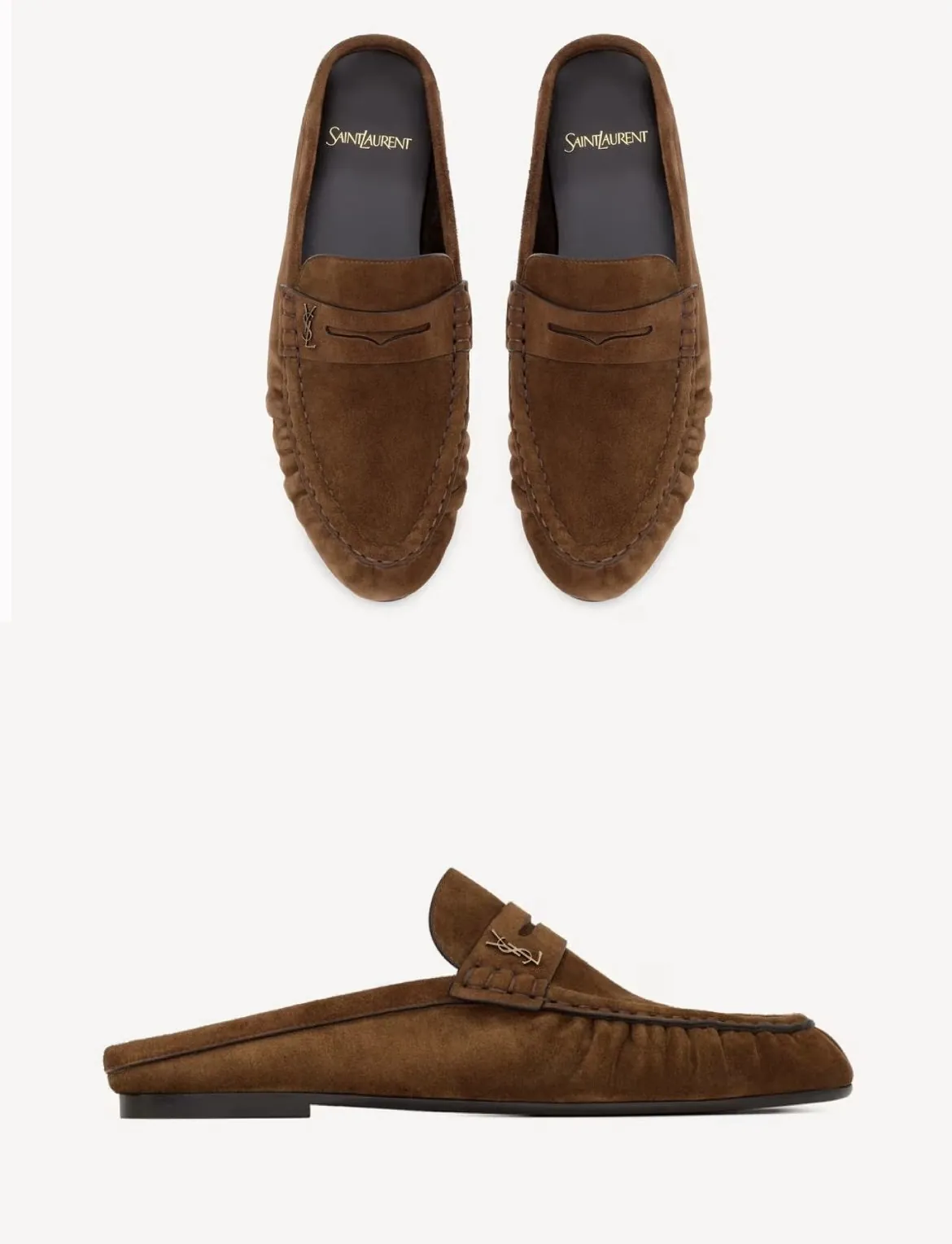
The featured image is an existing Saint Laurent wardrobe reference, separate from the Fall 2026 looks discussed here.
Over the crisp shirt: keep the knot small and the collar in charge
A crisp shirt already gives the neck structure: a collar band, points, and often a tie. If the ascot is added as a third element, it works when the collar stays visible and the silk is subordinate to it. A compact knot pushed up to the top button lets the collar points frame it, and the ends can be tucked or left to fall in a narrow line. Letting the ascot billow here competes with the tie and the collar at the same time.
The reported look pairs the shirt with a tie, so think of the ascot as the looser, softer layer beside a more formal one, or drop the tie and let the ascot carry that slot. Either way, the shirt fabric wants to read crisp next to the silk: cotton against a fluid printed square is the contrast the report implies.
Over the scoop-neck knit: start lower and let the ends spread
A scoop neck opens a wide, low curve, and a knotted ascot sitting tight at the throat can look cramped against it. The better placement is a loose wrap at the base of the neck with the knot sitting just above the scoop's dip, the printed ends falling across the exposed skin and over the knit. That way the silk fills the opening instead of floating above it.
With a chunky knit in particular, the report's saffron sweater is a good guide to scale: a heavier gauge needs a fuller spill of silk to balance it, while a fine knit takes a neater, shorter drape. On the reported saffron sweater, the colour question is already answered by the knit, so the ascot should add pattern and depth rather than a second loud colour.
Which piece carries the colour
In an otherwise dark collection, the knit and the ascot compete for the same job if both are saturated. My reading is to let the chunky sweater own the colour and choose a darker or tonal print for the ascot, so the neck detail reads as texture. Over a crisp shirt, the reverse often works better: a plain pale shirt plus a printed ascot puts the only strong colour at the throat, close to the face.
The softened jacket as the finish
The reported jacket line is softened at the sides and slightly hourglass, which matters when an ascot is adding volume at the neck. A boxy jacket would flatten that detail and make the whole upper half read as one slab; the softened side seam pulls in a little and keeps the silhouette from swallowing the silk. Wear the jacket open so the ascot and knit or shirt stay visible, and let the jacket's shape, not another accessory, do the finishing.
The reported full spill of ascots came later in the show, accenting matched tailored coats and knee-length shorts with stretch patent boots. If you follow that wider, longer drape, treat it as the outfit's main gesture and keep everything else quiet. For a related take on neckline silks, see bandana silk scarves and necklines and silk scarf necklines.